
 Svenska
 English
 Norsk
Norsk
 Suomi
Suomi
 Dansk
Dansk
Guide to High-Visibility Workwear - Safety, Regulations and the Right Choice.
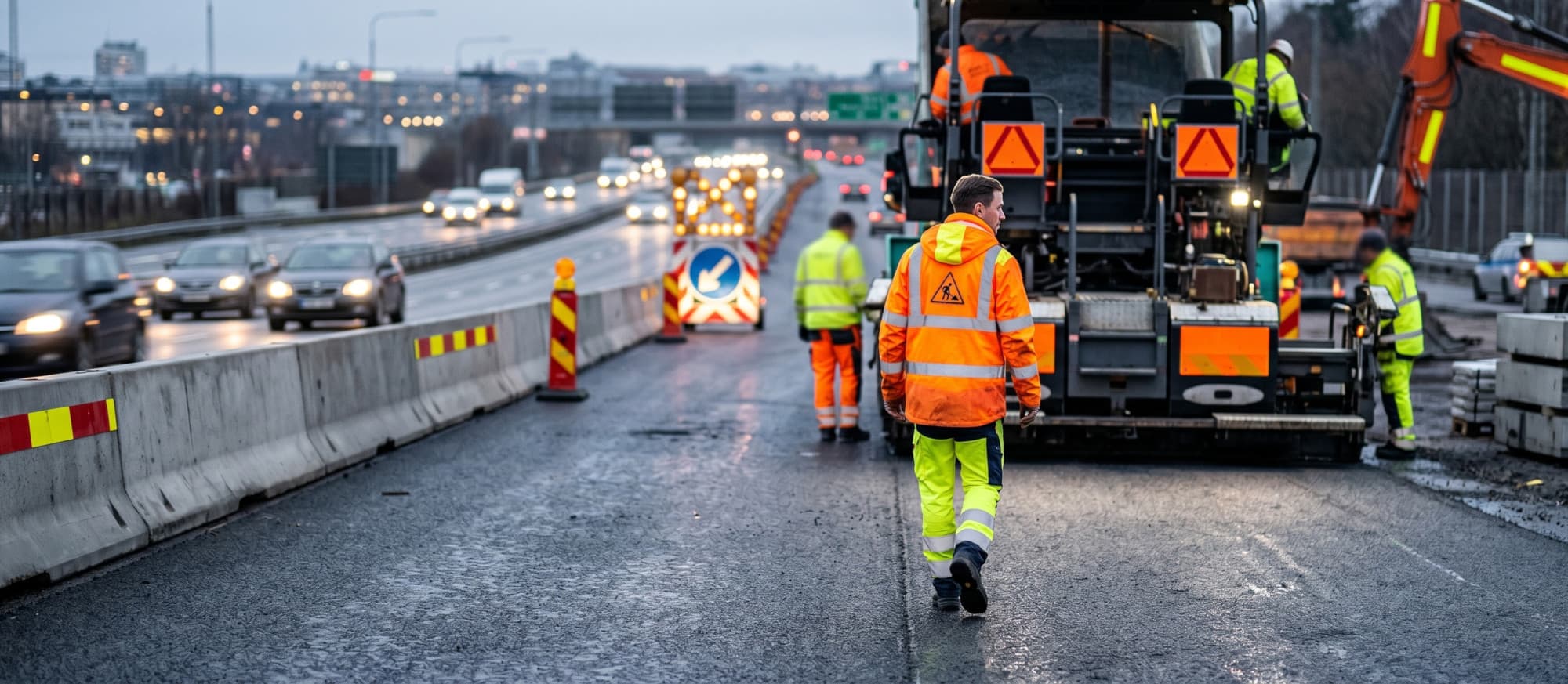
What Are High-Visibility Clothes and Why Are They Important?
High-visibility clothing is workwear designed to make the wearer more visible in environments where there is a risk of not being seen in time – such as road construction, transport, warehouse work, or industrial settings. Wearing high-visibility clothing reduces the risk of accidents and improves safety for both workers and those around them.
Purpose of High-Visibility Clothing
- Increased visibility: Reflective strips and fluorescent colors make you visible in daylight, dusk, and darkness.
- Preventive safety: Reduces the risk of being hit or involved in other work-related accidents.
- Legal requirements: In many work environments, high-visibility clothing is mandatory according to regulations from the Swedish Work Environment Authority.
Common Use Cases
- Road and construction work
- Transport and logistics
- Warehousing and terminals
- Emergency services and sanitation
- Industry and construction sites
By choosing the right type of high-visibility clothing for your work environment, you create a safer and more professional workday.
Safety Classes According to EN ISO 20471
High-visibility clothing is classified according to the European standard EN ISO 20471, which defines how visible garments must be in different work environments. The standard is divided into three safety classes – the higher the class, the better the visibility.
Why Is Classification Important?
- Helps you choose the right garments based on the risk level of your work environment
- Often required when working near traffic or machinery
- Simplifies procurement and ensures compliance with current regulations
Overview of Safety Classes

Class 1 – Lowest Level of Protection
Use: Low-risk environments where visibility is not critical.
Examples: Indoor warehouse work, forklift driving in restricted areas.
Requirements: Minimum 0.14 m² fluorescent material and 0.10 m² reflective material
Typical garments: Waist trousers with reflectors, basic vests.

Class 2 – Medium Level of Protection
Use: Work near traffic or machinery with moderate speed (up to 50 km/h).
Examples: Roadwork in urban areas, distribution tasks.
Requirements: Minimum 0.50 m² fluorescent material and 0.13 m² reflective material
Typical garments: High-visibility vests with good coverage, jackets, coveralls.

Class 3 – Highest Level of Protection
Use: High-risk environments, such as work on high-speed roads (>50 km/h), in darkness or poor weather.
Examples: Highway maintenance, emergency services, night work.
Requirements: Minimum 0.80 m² fluorescent material and 0.20 m² reflective material
Garment requirements: Must cover most of the body – often combinations like jacket + trousers or coveralls. Garments must have sleeves or legs with reflectors to meet the standard.

Combined Certification – Combine Garments to Achieve Class 3
A common question is whether a single Class 3 jacket is required, or if a combination of Class 2 garments can be sufficient.
In many cases, garments are tested and approved for combined certification, which means that a Class 2 jacket and Class 2 trousers together can meet the requirements for Class 3, provided that the combination is certified according to EN ISO 20471.
Tip: Always check the garment’s labeling and accompanying documentation. It should clearly state whether the garment is approved for use in combination with other garments to achieve a higher class.

Branding: The Pitfall of Logos on High-Visibility Clothing
For many companies, it is important that the brand is visible on the workwear. But when it comes to high-visibility clothing, strict rules apply.
A logo that is too large can make the garment non-compliant. For a garment to maintain its EN ISO 20471 classification, the logo may not cover too much of the fluorescent fabric, and it must never cover the reflective tape (unless the logo itself is a certified reflective material).
Our recommendation: Let us help you with the placement. The chest or a limited area on the back is usually the safest option to avoid downgrading a Class 3 jacket to Class 2.
Regulations and Requirements from Authorities
High-visibility clothing is not just a recommendation – in many work environments, it is a legal requirement. Several authorities have clear regulations on when and how high-visibility garments must be used, especially in environments with traffic, machinery, or limited visibility.
Swedish Work Environment Authority (Arbetsmiljöverket)
The regulations AFS 2001:3 and AFS 2008:13 from the Swedish Work Environment Authority require the use of personal protective equipment. High-visibility clothing must be worn when there is a risk of not being seen in time – for example, when working near vehicles or machinery
Key requirements include:
- Garments must be adapted to the work environment
- Visibility must be sufficient throughout the workday
- Clothing must be CE marked and comply with EN ISO 20471
Swedish Transport Administration – TRVK Apv
For work on or near roads, the TRVK Apv technical requirements apply. These specify which safety class is required depending on the task and traffic conditions
- Class 3 is often required for work on roadways
- Class 2 may be sufficient for work in separated areas
- All garments must be approved according to EN ISO 20471
CE Marking and EN ISO 20471
All high-visibility clothing used in professional environments must be CE marked and meet the requirements of EN ISO 20471. This standard ensures that garments are tested and approved according to EU safety regulations
Why compliance matters:
- Ensures legal conformity
- Enhances workplace safety
- Facilitates procurement and quality assurance
Checklist for Buyers of High-Visibility Clothing
Use this list to ensure you make the right choices for your workplace:
- Risk analysis: Have you documented which risk class (1, 2 or 3) is required for each work task?
- Seasonal needs: Does the staff require insulated winter clothing, rainwear (EN 343), or lightweight summer garments?
- Combined certification: Can you reduce the number of items by combining jacket and trousers to achieve the required class?
- Branding: Have you ensured that the print does not interfere with the safety class?
- CE marking: Are all garments marked with EN ISO 20471? (At Tingstad, we only sell approved workwear.)
Frequently Asked Questions About High-Visibility Clothing
What does EN ISO 20471 mean?
EN ISO 20471 is a European standard that regulates the visibility of high-visibility clothing. It ensures that garments contain enough fluorescent material and reflective strips to be seen in various lighting conditions.
What is the difference between Class 1, 2, and 3?
Safety classes indicate the level of visibility provided by the garment: Class 1: Lowest visibility – used in low-risk environments. Class 2: Medium visibility – e.g., when working near traffic. Class 3: Highest visibility – required for work on roads with high-speed traffic or in darkness.
Can I combine garments to achieve Class 3?
Yes, you can combine garments such as a jacket and trousers that together meet the requirements for Class 3. It’s important that the combination is certified as a whole according to EN ISO 20471.
How do I know if a garment is CE marked?
The CE marking is found on the label or in the product information. It indicates that the garment is approved according to EU requirements for personal protective equipment.
Do I need different high-visibility clothing for summer and winter?
Yes. Summer garments are usually lighter and breathable, while winter garments are insulated and sometimes waterproof. Choose clothing that suits both the climate and your work environment.
Author: Tingstad
Last Updated: 2025-08-19

High-Visibility Clothing for All Work Environments.
At Tingstad, you’ll find CE-marked high-visibility clothing for summer and winter – designed for warehouse, construction, transport and industrial work. Always with a focus on safety, comfort and quality.
Customer service
About us
Stores
We can help you!
Visiting Address:
Marieholmsgatan 1, 415 02 Gothenburg
Post Address:
Box 13013, 402 51 Gothenburg







Shop safely with

