
 Svenska
 English
 Norsk
Norsk
 Suomi
Suomi
 Dansk
Dansk
What Do the Labels Mean?

To make it easier for you, we have categorized the labels based on the type of products they apply to. Here, you will find information on environmental labels for everything from products and textiles to forestry and recycling.
Read on to learn more about what each label represents and how they can help you make sustainable choices.
Environmental Labels for Products

Nordic Swan Ecolabel.
The Nordic Swan Ecolabel purpose is to give consumers a clear and concise environmental product information, as well as promoting the development of products that are environmentally-sound. Aspects that are reviewed are energy use in manufacturing, water consumption, the use of chemicals, as well as waste management. Companies apply for their product Swan labeled, then checked that the product complies with Swan's requirements through labs, certificates, documentation, and inspection visits.
EU Ecolabel.
EU Ecolabel works in the same way as the Nordic Swan label. The purpose is to promote products with reduced environmental impact throughout their life cycle. The label is also intended as a guide to consumers in their product selection. The products must meet environmental, functional and quality requirements. Since Sweden has Nordic Swan label labeling, there are few products with EU Ecolabel, the supply of these goods is greater in other EU countries.

Bra miljöval (Good Environmental Choice).
Bra miljöval, or Good Environmental Choice, belong to the Swedish Society for Nature Conservation and build on two basic ideas: that natural resources must be saved, and that biodiversity and human health should not be threatened. This means, among other things, that all toxic and biodegradable chemicals should be removed. In order for a product to be labeled with Good Environmental Choice, there are a number of requirements that companies have to live up to.
Labels for Textiles and Cotton
Fairtrade Cotton.
Fairtrade Cotton is a product label aimed at improving working conditions and conditions for growers and employees in developing countries through fair trade.
GOTS.
Global Organic Textile Standard (GOTS) is an international label for clothing and textile covering both social and environmental requirements.
OEKO-TEX Standard 100.
OEKO-TEX Standard 100 is an independent testing and certification system for textile products. The material is tested so that there are no prohibited substances and substances in the textile. The more intensive contact between the skin and the product, the higher the requirements must be met. In order to be certified by the standard, all the components in the product must meet the requirements of the respective product classes.
Sustainable Agriculture Certifications
Krav.
KRAV is a control association for organic production. The aim is to pursue a long-term sustainable and consumer-oriented perspective of the production of food and other high-quality products.
EU Ecological.
The EU Leaf or EU Ecological is the EU‘s eco-label. It shows that the product is in full compliance with the terms and conditions laid down by the European Union for organic farming. For processed products, it means that at least 95% of the ingredients are grown ecologically.
UTZ Certified.
UTZ Certified stands for sustainable agriculture and better opportunities for farmers, their families and our planet. The UTZ label shows consumers that the products have been produced in a sustainable way.

Fairtrade.
Fairtrade is not an ecolabel. It is a product labeling of mainly foodstuffs, aimed at improving working and living conditions for traders and employees in developing countries through fair trade. Criteria such as minimum wages, child labor, discrimination and democracy are covered by Fairtrade.
Responsible Forestry
FSC® – Forest Stewardship Council®.
FSC will promote environmentally-friendly, socially responsible and economically viable use of the world's forests. They work with scrutiny and approval of forestry standards and develop standards for traceability certification. FSC certification is a voluntary agreement between landowners.
PEFC – Pan European Forest Certification.
The goal of PEFC is to develop sustainable private forestry, taking into account forest production, environmental and social interests. PEFC ensures that PEFC-certified forests are managed according to the requirements for sustainable forestry.
Circular Economy and Recycling
Cradle to Cradle®.
Cradle to Cradle® is a non-profit organization that certifies products based on 5 quality categories: social justice, water management, renewable energy and carbon balance, healthy materials and reusable materials. A product with Cradle to Cradle® certification has very good environmental characteristics from a sustainability perspective.
Tingstad Information Symbols
Renewable raw material.
The symbol indicates that the product is made of renewable raw material, such as wood- or fiber-based material. The proportion of renewable raw material is stated in the icon. The information comes directly from the manufacturer. The symbol serves only as a guide and is not an environmental label, as it is not reviewed by any external party or third-party organization.
Recycled material.
The symbol indicates that the product consists of recycled material. The proportion of recycled material is indicated in the icon. The symbol serves only as a guide and is not an environmental label, as it is not reviewed by any external party or third-party organization.
Certified raw material.
The symbol indicates that the product contains raw material from traceable and responsibly managed forestry, according to information from the manufacturer. The information comes directly from the manufacturer. The symbol serves only as a guide and is not an environmental label, as it is not reviewed by any external party or third-party organization.
Recyclable.
The symbol indicates that the product can be recycled or is made from recycled material. The information comes directly from the manufacturer. The symbol serves only as a guide and is not an environmental label, as it is not reviewed by any external party or third-party organization.
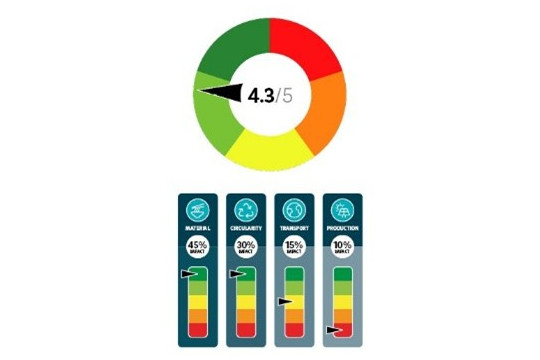
The Climate Compass.
The Climate Compass is a tool developed to describe the environmental impact of disposable products. The product's impact is shown using a compass value from 1 to 5, where 5 represents the highest sustainability value. The compass value itself is based on four environmental aspects, known as climate categories: Material, Circularity (recyclability), Transport, and Production. The Climate Compass® was developed together with RISE in 2020. Read more about the Climate Compass.
Understanding environmental labels helps you make informed choices for a more sustainable future. By choosing certified products, you contribute to environmental protection, fair working conditions, and responsible forestry. Look out for these labels the next time you shop!
Want to explore sustainable products? Discover our wide range of eco-labeled options.
Author: Tingstad
Last Updated: 2025-05-22
YOU MAY ALSO BE INTERESTED BY

Product guide: Paper Cups.
Learn more about one of our best-selling products: the paper cup. Here you will get info on how a paper cup is structured, what environmental friendly alternatives are available and current news from the industry.
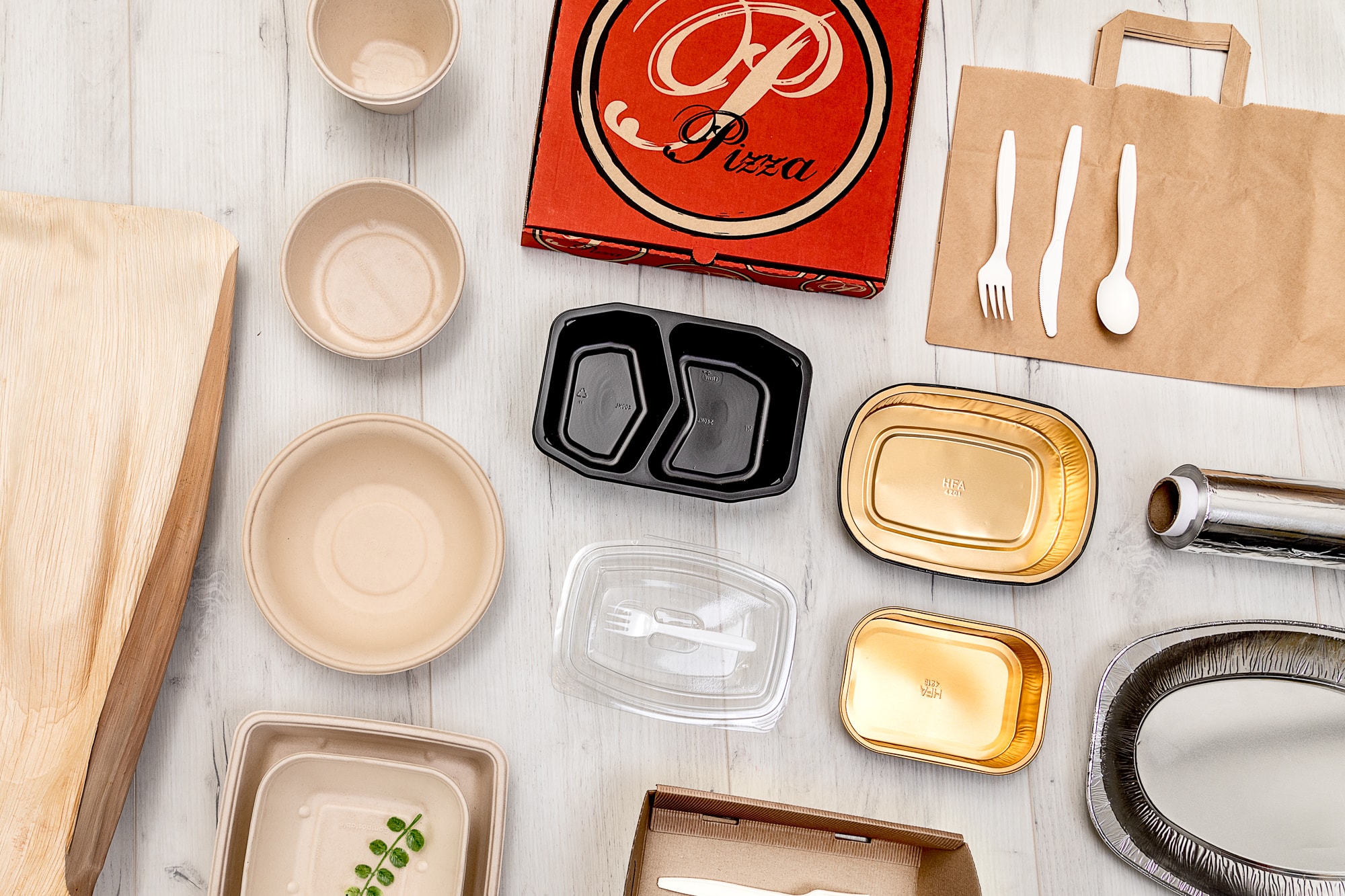
Material guide.
It is important for us to help our customers make informed decisions. Therefore, we have developed a material guide to make it easier for you as a customer.

Sustainability.
We are certified to ISO 14001: 2015 Environmental, and 9001: 2015 for Quality. Read more about what this means for our customers and about our environmental work.
Customer service
About us
Stores
We can help you!
Visiting Address:
Marieholmsgatan 1, 415 02 Gothenburg
Post Address:
Box 13013, 402 51 Gothenburg



Shop safely with

