
 Svenska
 English
 Norsk
 Suomi
 Dansk

Bed Bugs – How to Identify and Manage Them
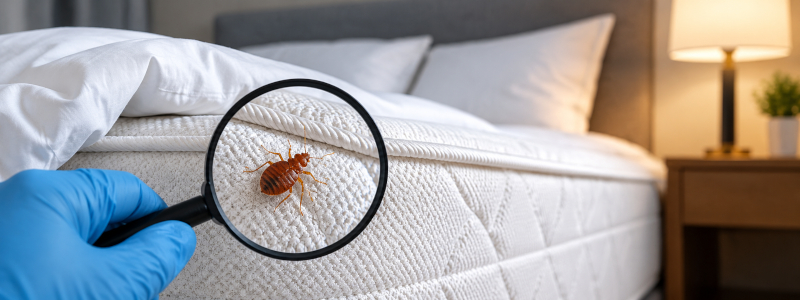
Bed bugs are small, blood-feeding insects that often hide in and around beds. They can spread through suitcases, clothing, furniture, and other belongings. For hotels, hostels, and other accommodation businesses, it is therefore important to recognise the signs and take action early.
This guide explains how to detect bed bugs, reduce the risk of spreading them, and manage an infestation.
Why Are Bed Bugs a Problem?
Bed bugs are problematic primarily because they can be difficult to detect and eliminate.
They often hide in small cracks and crevices near sleeping areas and typically emerge when people are asleep. Bed bugs can cause itchy bites and significant discomfort, although they are not known to transmit infectious diseases.
For hotels, hostels, and other accommodation providers, an infestation may mean that rooms need to be taken out of service during inspection and treatment. It can also lead to additional costs, operational disruptions, and dissatisfied guests.
For this reason, it is important to have clear procedures for identifying and reporting suspected bed bug activity.
Signs That You Have Bed Bugs
Bed bugs are often difficult to spot because they remain hidden during the day. However, there are several signs to look for:
- Small black spots: Bed bug droppings may appear as dark spots on mattresses, bed frames, and other surfaces near the bed.
- Blood stains: Small blood marks may sometimes be found on sheets and bedding.
- Shed skins: Bed bugs shed their skins as they grow. Thin, pale skin casings may be found where they hide.
- Live bed bugs: Adult bed bugs are flat, oval-shaped, and brownish. They are often found in mattress seams and cracks in bed frames.
- Bites and skin reactions: Itchy red marks can occur, although the appearance of bites alone is not enough to confirm bed bugs.
Pay particular attention to mattress seams, headboards, bed frames, and cracks in nearby furniture.
If you find a suspected bed bug, and can do so without spreading it, place it in a sealed container for identification.
What Should You Do If You Suspect Bed Bugs?
If you suspect bed bugs in a hotel room or other accommodation area, act immediately, even if you are not yet certain.
1. Document What You Found
Record where the signs were found and when they were discovered.
Take photographs of insects, droppings, or other evidence if possible. This can help pest control professionals assess the situation.
2. Avoid Spreading Bed Bugs
Do not move mattresses, bedding, furniture, or other items from the suspected room to other areas without a plan for handling them.
Bed bugs can spread by hitchhiking on objects and belongings.
Seal potentially infested textiles in airtight bags until further instructions are available.
3. Contact Professional Pest Control
Arrange for an inspection as soon as possible.
A pest control specialist can confirm whether bed bugs are present, assess the extent of the infestation, and recommend appropriate treatment.
If bed bugs are confirmed, follow the treatment company's instructions for the room, furniture, and affected belongings.
How to Prevent Bed Bug Problems
It is impossible to guarantee that bed bugs will never enter a business. However, regular inspections and clear procedures can help detect problems at an early stage.
For hotels, hostels, and other accommodation providers, the following measures are particularly important:
- Inspect beds regularly: Look for black spots, shed skins, and other signs in mattress seams, headboards, and bed frames.
- Check second-hand furniture: Inspect beds, mattresses, upholstered furniture, and other used items before bringing them into the premises.
- Establish staff procedures: Ensure housekeeping staff and other employees know what signs to look for and who to contact if they suspect bed bugs.
- Investigate guest reports: Complaints about bites or insects should always be taken seriously, even though they do not automatically indicate bed bugs.
- Consider monitoring traps: Detection traps can be used as monitoring tools, although they are not a substitute for a proper inspection.
- Document previous incidents: Keep records of where bed bugs have been detected and what measures were taken.
Good cleaning practices and routine inspections are important, but bed bugs can occur even in very clean premises. An infestation should not be seen as evidence of poor housekeeping.
Products That May Help With Bed Bugs
Several products can assist in detecting bed bugs or supporting treatment efforts.
Detection Traps
Bed bug monitoring traps can help determine whether bed bugs are present.
How a trap functions and where it should be placed depend on the specific product, so always follow the manufacturer's instructions.
A trap that catches nothing does not guarantee that the room is free of bed bugs.
Bed Leg Traps
Bed leg interceptors are designed to be placed beneath bed legs to capture or detect bed bugs attempting to climb onto or off the bed.
They can be useful for monitoring but do not provide complete protection if bed bugs are already present in the bed or can reach it by other routes.
Mattress Encasements
Special bed bug-proof mattress encasements can be used as part of a bed bug management programme, provided they are specifically designed for this purpose and used according to the manufacturer's instructions.
Always ensure that the encasement fits the mattress correctly and is intended for bed bug control.
Laundry Bags
Laundry bags designed for handling infested textiles can help transport bedding and clothing safely while reducing the risk of spreading bed bugs.
Always follow the manufacturer's instructions and verify which washing temperatures the bags are designed to withstand.
These products can be useful tools but should never replace professional treatment of a confirmed infestation.
Laundry and Textile Handling
Clothing, bedding, and other textiles often need to be treated as part of bed bug control efforts.
The most appropriate method depends on the material, the item being treated, and the instructions provided by the pest control company.
Common methods include:
- Washing: Wash suitable textiles at a minimum of 60°C (140°F).
- Tumble drying: High heat can be used for appropriate textiles. The temperature and treatment time must be sufficient.
- Freezing: Some items can be treated by freezing them at -18°C (0°F) for at least one week, provided the entire object reaches the required temperature.
Keep potentially infested textiles sealed during transport and handling.
Always follow the pest control provider's instructions before moving, washing, or treating items. Incorrect handling may spread the infestation further.
When Should You Seek Professional Help?
If you suspect bed bugs in a hotel room, hostel, or another accommodation facility, professional pest control should be contacted as early as possible.
Bed bugs can hide in many different locations within a room, and it is not always possible to determine the extent of an infestation through a basic inspection alone.
Professional assistance may be needed to confirm the infestation, carry out treatment, and verify that the problem has been resolved afterwards.



Problems with Pests?
Our pest control service is designed to provide a long-term, hassle-free solution. Our pest control technicians have the expertise needed to give you practical recommendations on what can be improved in your business to help keep pests away.

Pest Control Products.
Get rid of pests! Explore our effective pest control solutions to keep unwanted guests away. From small flies to mice, we have the solutions to protect your business. Short Text: For pest control.
Customer service
About us
Stores
We can help you!
Visiting Address:
Marieholmsgatan 1, 415 02 Gothenburg
Post Address:
Box 13013, 402 51 Gothenburg








Shop safely with

