
 Svenska
 English
 Norsk
Norsk
 Suomi
Suomi
 Dansk
Dansk
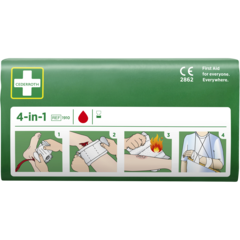
Blood Stoppers & Pressure Dressings.
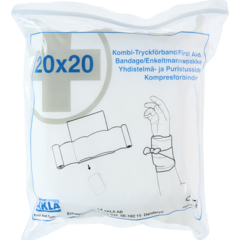
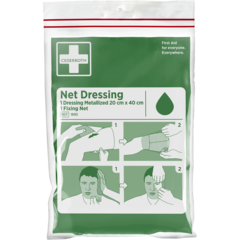
In cases of severe bleeding, time is the most critical factor. A correctly applied pressure bandage can make the difference between a minor injury and a life‑threatening situation. Here you’ll find products designed to stop blood flow quickly and effectively. Our best‑seller, Cederroth Blood Stopper (4‑in‑1), is standard in most Swedish first aid kits and replaces traditional first aid dressings thanks to its unique versatility. We also offer haemostatic spray for minor cuts and complementary pressure pads.
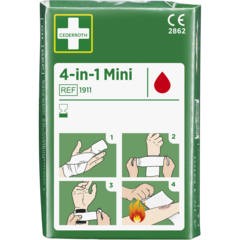
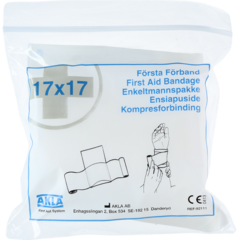
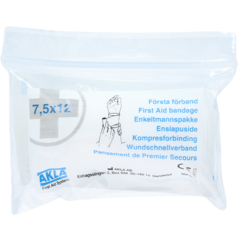
Showing to of articles
How a Blood Stopper works
A pressure bandage has one main purpose: to apply constant pressure to a bleeding wound in order to help the blood clot and stop the flow.
Cederroth 4‑in‑1 – A Swedish classic
Cederroth’s blood stopper is called “4‑in‑1” because it replaces four different types of dressings. It’s an ingenious product that belongs in every car, boat and toolbox.
- Pressure bandage: For severe bleeding. The integrated elastic bandage roll is used to apply firm pressure directly over the wound pad.
- Cover dressing: For superficial wounds. In this case, the bandage is wrapped more loosely to protect against dirt.
- Burn dressing: The special surface of the pad does not adhere to wounds, making it suitable for burns (ideally combined with /din-url-till-brannskadorBurn Gel).
- Support bandage: Can be used in an emergency to wrap a sprained foot or wrist.
Difference between the “Large” and “Small” Blood Stopper
- Large Blood Stopper: Intended for arms, legs and larger body parts. This is the standard version found in most wall‑mounted stations.
- Small Blood Stopper (Mini): Specifically designed for fingers and toes. Smaller and easier to wrap around a fingertip, where a large dressing would be bulky and inconvenient.
Haemostatic spray – for minor wounds
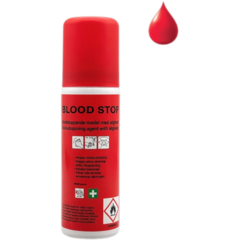
For small cuts, such as shaving cuts or paper cuts, a haemostatic spray is an excellent complement. The spray forms an immediate “scab” (often using ferric subsulfate) that stops the bleeding instantly—without the need for a plaster. It’s a popular product among hairdressers and in sports facilities.
How to apply a pressure bandage
- Elevation: If possible, raise the injured body part above heart level.
- Pressure: Place the pad directly on the wound.
- Secure: Wrap the elastic bandage tightly. If blood soaks through, tighten further or apply additional pressure (e.g. an extra roll) before continuing to wrap.
- Do not remove: Never remove a soaked bandage—apply additional material on top instead.
Only need basic protection? Take a look at our category for /din-url-till-plasterPlasters & Plaster Dispensers.
Customer service
About us
Stores
We can help you!
Visiting Address:
Marieholmsgatan 1, 415 02 Gothenburg
Post Address:
Box 13013, 402 51 Gothenburg







Shop safely with

