
 Svenska
 English
 Norsk
Norsk
 Suomi
Suomi
 Dansk
Dansk
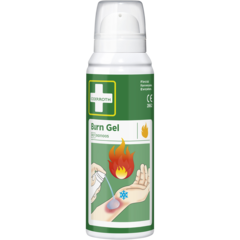
Burn Gel & Treatment.
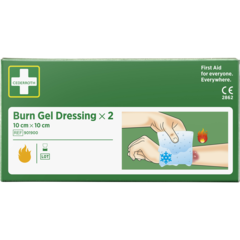
In the event of a burn injury, heat continues to damage tissue deep beneath the skin long after the accident has occurred. That’s why immediate cooling is critical. Here you’ll find professional burn gel (hydrogel) and impregnated dressings that cool just as effectively as running water, while being easy to carry and use. Our products from brands such as Cederroth and Burnshield provide instant pain relief, reduce the risk of blistering and help speed up the healing process. A must‑have for kitchens, welding workshops and industrial environments.

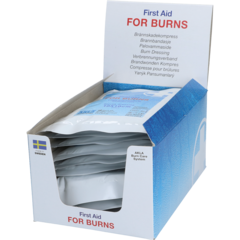
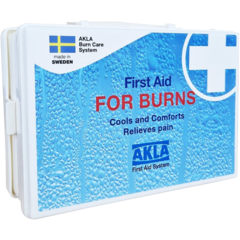
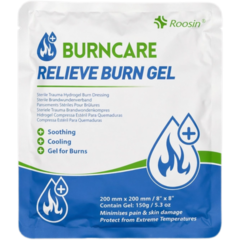
Showing to of articles
How to treat a burn injury
Burn injuries are commonly classified as first-, second- or third-degree burns. Regardless of the severity, the first action is always the same: Cool the injury.
Why is burn gel better than water?
Traditionally, cooling with cool running water is recommended—and this is still correct. However, in emergency situations, burn gel (hydrogel) offers several key advantages:
- Portability: You cannot bring the water tap to the injured person, but you can bring a bottle of gel or an impregnated dressing.
- Targeted cooling: The gel stays in place on the injury and cools effectively without lowering the patient’s overall body temperature (reducing the risk of shivering or hypothermia).
- Pain relief: Burn gels often contain ingredients (such as Tea Tree Oil or simply the moisture itself) that provide immediate soothing relief.
Choose the right product for the injury
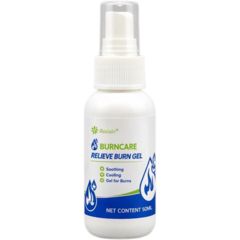
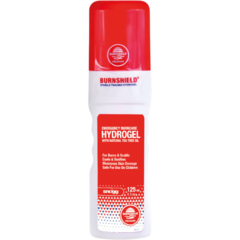
- Spray & Bottle: Ideal for superficial burns, scalds or sunburn. Spray bottles are hygienic, as you do not need to touch the sensitive skin.
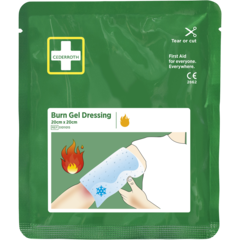
- Dressings (Compresses): For deeper or larger injuries. A gel‑soaked dressing is placed over the wound and loosely secured, creating a moist environment that protects against infection and prevents scabs from sticking.
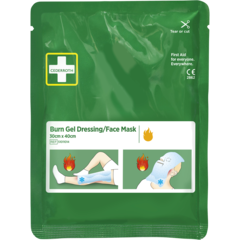
- Face masks: Special large dressings designed for facial burns, with openings for the eyes, nose and mouth. Commonly used by emergency services and in industrial settings.
Aftercare and protection
Once the acute phase is over and the injury has been cooled for at least 15–20 minutes, the wound needs protection.
- Do not puncture blisters: Blisters are the body’s natural protection. Piercing them increases the risk of infection.
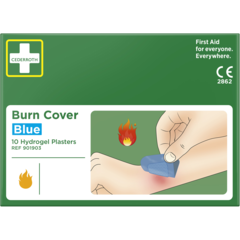
- Special dressings: Use a hydrogel dressing (e.g. Burn Cover) to keep the wound moist. Dry wounds heal more slowly and are more painful.
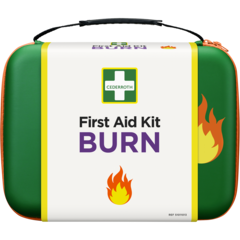
Do you work in an environment with a high risk of burn injuries? Make sure you have a wall‑mounted First Aid Station equipped with burn care products.
Customer service
About us
Stores
We can help you!
Visiting Address:
Marieholmsgatan 1, 415 02 Gothenburg
Post Address:
Box 13013, 402 51 Gothenburg








Shop safely with

