
 Svenska
 English
 Norsk
 Suomi
 Dansk
Respiratory Protection, Face Masks and Filter Masks
At Tingstad, you'll find respiratory protection equipment for a variety of working environments, ranging from disposable filtering facepiece respirators in protection classes FFP2 and FFP3 to reusable half masks and full-face masks. We also offer face masks, particle filters, gas filters, and accessories from brands such as 3M, Sundström, and Granberg.
The type of protection you need depends on the hazards present in your work environment. Dust and airborne particles, for example, require different filters than gases and vapours. It's also important that the mask fits the user correctly and that the appropriate filter is selected for the specific risk.

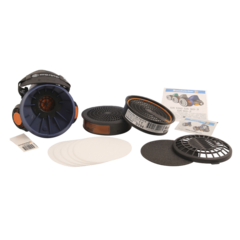
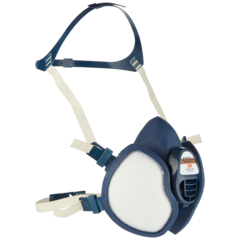
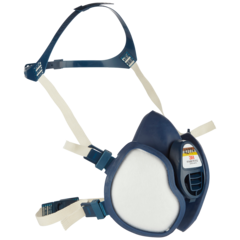
Showing to of articles
Which Respiratory Protection Should I Choose?
There are several types of respiratory protection, and they work in different ways. Start by identifying which substances or particles you need protection against. Once you know the risks, you can choose the appropriate mask and filter.
Filtering Facepiece Respirators – FFP2 and FFP3
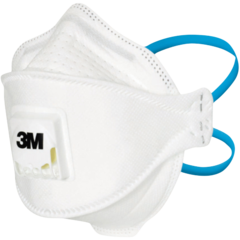
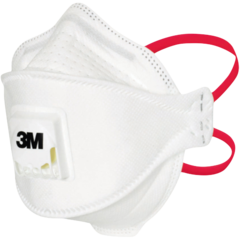
Filtering facepiece respirators are used to protect against airborne particles, for example during certain grinding, sanding, and other dust-generating tasks. They are available in different protection classes, with FFP3 providing a higher level of protection than FFP2.
These masks are available both with and without exhalation valves. The required protection class depends on the hazards present in the workplace. Standard FFP2 and FFP3 masks do not protect against gases and vapours.
Half Masks and Full-Face Masks
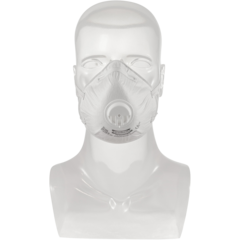
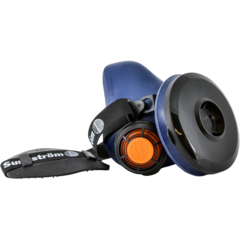
A reusable half mask covers the nose and mouth and is used together with suitable filters. It can be a practical option when respiratory protection is needed regularly.
A full-face mask also covers the eyes and may be appropriate when both the respiratory system and the eyes require protection. The level of protection depends on factors such as the mask design, fit, and filter selection.
Particle Filters and Gas Filters
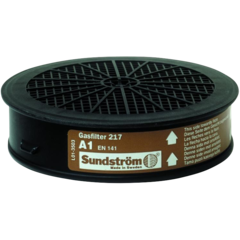
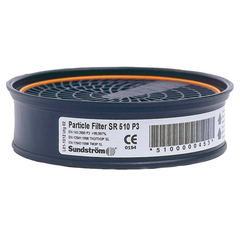
Particle filters are intended for protection against airborne particles, while gas filters are designed for specific types of gases and vapours. For some work tasks, a combination filter may be required.
Always check that the filter is suitable for the substances you work with and that it is compatible with the mask being used.
Face Masks and Respirators – What's the Difference?
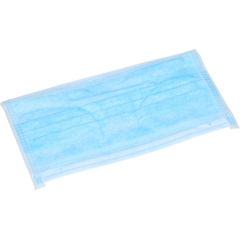
A standard medical face mask is primarily designed to limit the spread of droplets from the wearer to the surrounding environment and may also provide protection against splashes.
Respirators, on the other hand, are designed to protect the wearer against inhaling certain airborne contaminants. A standard face mask should therefore not be used as a substitute for respiratory protection when the task requires protection against harmful dust or similar hazards.
Pay Attention to Fit
A respirator must fit correctly to provide the intended level of protection. Tight-fitting respiratory protection used in the workplace should be individually fitted and fit-tested.
Also follow the manufacturer's instructions regarding use, cleaning, maintenance, and filter replacement.
Customer service
About us
Stores
We can help you!
Visiting Address:
Marieholmsgatan 1, 415 02 Gothenburg
Post Address:
Box 13013, 402 51 Gothenburg







Shop safely with

