
 Svenska
 English
 Norsk
 Suomi
 Dansk

Safety Helmets
At Tingstad, you'll find safety helmets for work in construction, industry, civil engineering, and other environments where the head needs protection from impacts and falling objects. We offer work helmets from brands such as 3M Peltor and Kask in a variety of colours and designs. The range also includes bump caps and accessories such as chin straps, visors, and sweatbands.
When choosing a safety helmet, it is important to consider both the level of protection and the fit. Depending on the task, features such as ventilation, chin straps, and the ability to combine the helmet with hearing protection or a visor may also be important. Always ensure that the helmet is suitable for the hazards present in your work environment.




Showing to of articles
Choosing the Right Safety Helmet for the Job
A safety helmet is used to reduce the risk of head injuries from hazards such as falling objects or impacts to the head. The most suitable helmet depends on the working environment and the risks involved.
Safety Helmets for Construction and Industry
In construction, civil engineering, and industrial environments, safety helmets that comply with EN 397 are commonly used. This standard includes requirements for impact absorption and resistance to penetration.
Helmets are available with different features, such as ventilation, adjustable suspension systems, and the ability to attach chin straps or other accessories. For work at height or in other specialised environments, additional requirements may need to be met.
Safety Helmet or Bump Cap?
A bump cap is designed to protect the head against minor impacts, such as accidentally striking fixed objects in confined spaces. However, bump caps that comply with EN 812 are not intended to protect against falling objects.
In workplaces where there is a risk of falling objects, a safety helmet with the appropriate protective properties is required. A bump cap is not an equivalent alternative.
Accessories for Safety Helmets
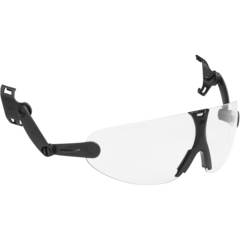
Some tasks require the helmet to be used together with other protective equipment, such as earmuffs, visors, or chin straps.
Always ensure that accessories are approved for use with the specific helmet model. Not all helmets and accessories are compatible, and incorrect combinations may reduce the level of protection.
What Do Safety Helmet Colours Mean?
At some workplaces, different helmet colours are used to distinguish between job roles, work teams, or visitors. For example, supervisors may wear one colour while tradespeople wear another.
However, there is no universal colour-coding system that applies across all workplaces. The meaning of helmet colours can vary between companies and projects, so always follow the rules that apply at your workplace.
Check the Condition of the Helmet
A safety helmet should be inspected regularly and replaced when it no longer provides the intended protection. Cracks, deformation, or other damage can affect its protective performance.
Follow the manufacturer's instructions regarding inspection, cleaning, storage, and replacement. A helmet that has been subjected to a significant impact may need to be replaced even if no visible damage is present.
Customer service
About us
Stores
We can help you!
Visiting Address:
Marieholmsgatan 1, 415 02 Gothenburg
Post Address:
Box 13013, 402 51 Gothenburg





Shop safely with

