
 Svenska
 English
 Norsk
Norsk
 Suomi
Suomi
 Dansk
Dansk
Material guide: Renewable Materials.
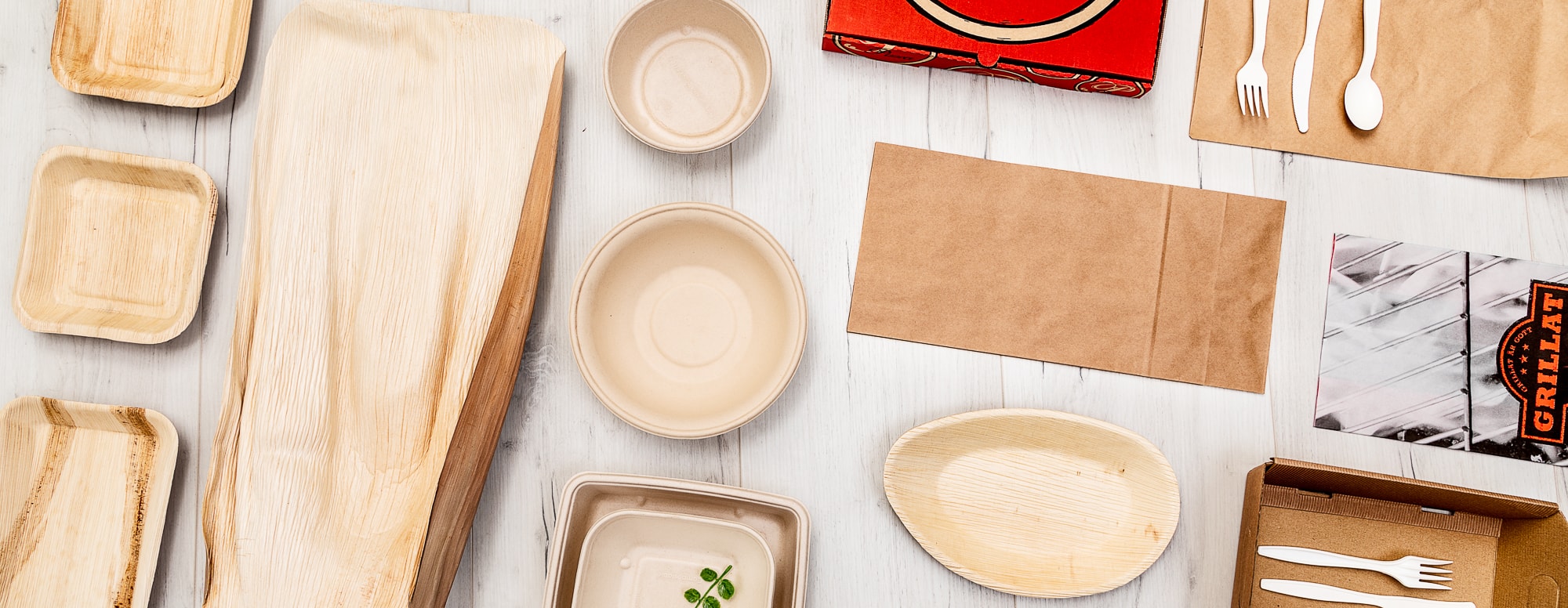
Renewable material means raw material that comes from plants or biomass. Unlike fossil raw materials, which use oil in the prodcution of products, renewable materials form part of the biobased carbon cycle and therefore do not contribute directly to the greenhouse effect.
From an environmental point of view, renewable materials is a good long-term choice for disposables, provided that plants and forests can be grown and harvested in a responsible and environmentally friendly manner. By using renewable materials you support the development that leads to technology and market of manufacturing and recycling of alternative materials.
Examples of renewable materials are PLA (from corn starch / sugar cane), paper (from trees), and bagasse (sugar cane fibers).
Renewable materials
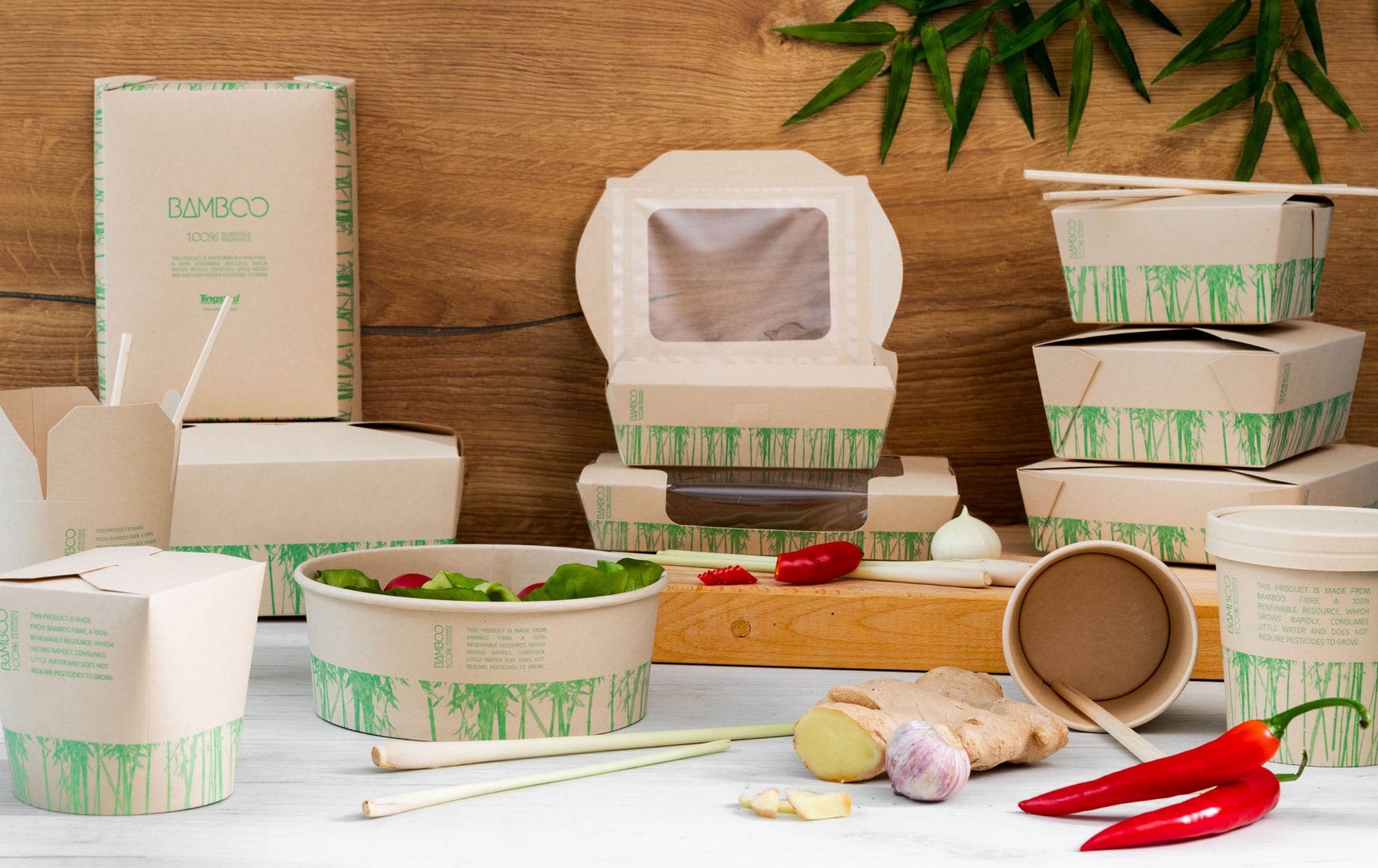
Bamboo
Bamboo is renewable raw material with a rapid regrowth. After use the material can be recycled as paper packaging. Bamboo is a grass that does not require any chemical or pesticides during production. Bamboo binds a lot of carbon dioxide which is good for the environment.
- Raw material with rapid regrowth
- 100% renawable raw material
- Can be reycled as paper packaging
| Material: | Bamboo |
| Appearance: | Nature |
| Raw material: | Bamboo |
| Temperature: | -60°C to +100°C |
| Microwavable: | No |
| Recyclable: | Yes, as paper packaging |
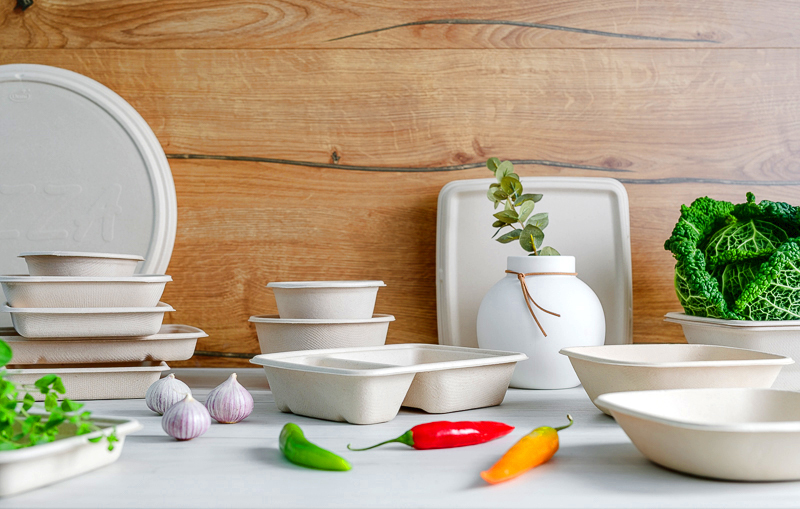
Bagasse
Bagasse is the remaining fiber material that becomes over when juice from sugar cane is extracted. Bagasse products can withstand high temperatures and are great for both hot and cold dishes. After use the material in the product can be recycled as paper packaging.
- 100% renewable raw material
- Can be reycled as paper packaging
- Withstands temperatures above 100⁰C
| Material: | Bagasse |
| Appearance: | Nature |
| Raw material: | Sugar cane |
| Temperature | 0°C to +100°C |
| Microwavable: | Yes |
| Recyclable: | Yes, as paper packaging |
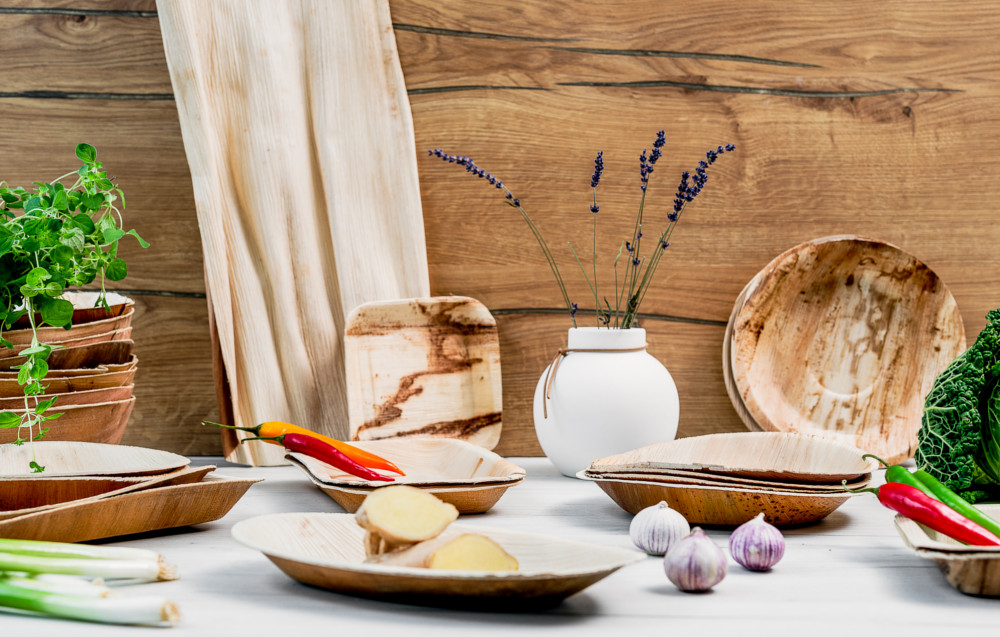
Palm Leaf
Palm leaf products are made from a 100% renewable and biodegradable raw material: palm leafs. They are made from fallen leafs and are picked when the leafs fall from the trees.
The leaves are collected and placed in a water bath where they are compressed into finished products at a temperature of 120°C. No other additives or coatings are used in the preparation of the final product and every palm leaf product is unique in appearance. The material has a good stiffness and light weight. Palm lead products have heat and water repellent properties, which means that the products can be used in high temperatures.
The material is suitable for all types of foods: hot, wet and fatty foods. The products can also be used in both freezer and micro. Because the material is completely natural there is no risk that chemicals will migrate to the food.
- 100% renawable raw material
- Withstands temperatures from -25⁰C up to +220⁰C
- Energy recovered by combustion
| Material: | Palm Leaf |
| Appearance: | Brown / white |
| Raw material: | Palm leaf, cultivated adacapalm |
| Temperature: | -25°C to +220°C |
| Microwavable: | Yes |
| Recyclable: | Energy recovered by combustion. Material cannot be recycled. |
Wheat straw
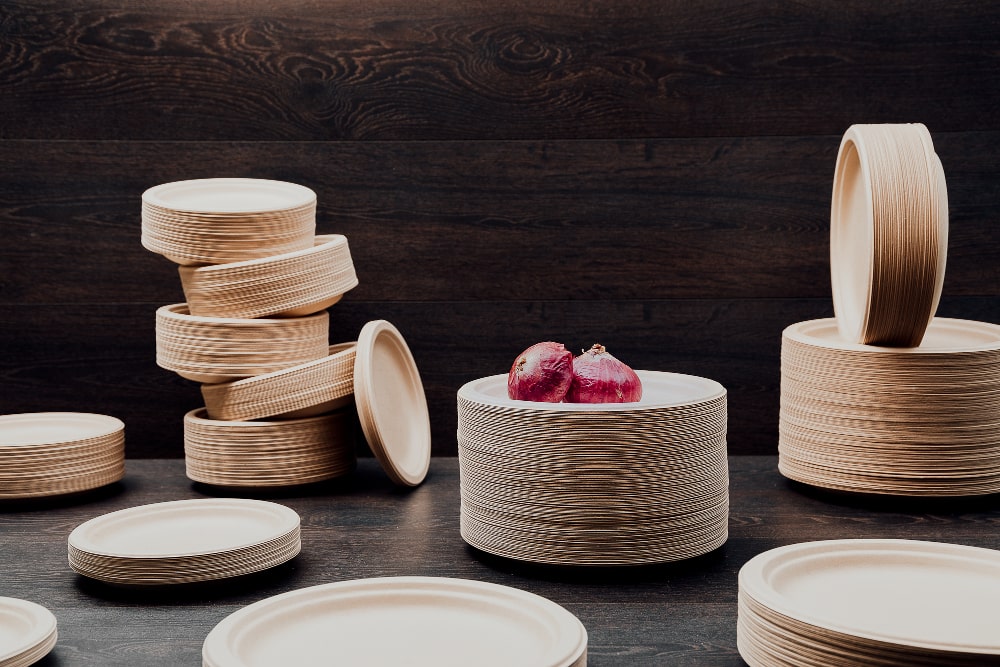
Wheat straw is a remaining material that is left over when wheat grain are harvested. Wheat straw can then be recycled and from the material you can make paper-like products such as plates. Wheat straw products withstand high heat and are ideal for both hot and cold dishes.
- 100% renewable raw material
- Can be reycled as paper packaging
- Withstands temperatures above 100⁰C
| Material: | Wheat straw |
| Appearance: | Nature |
| Raw material: | Wheat straw |
| Temperature | 0°C to +100°C |
| Microwavable: | Yes |
| Recyclable: | Yes, as paper packaging |
Paper
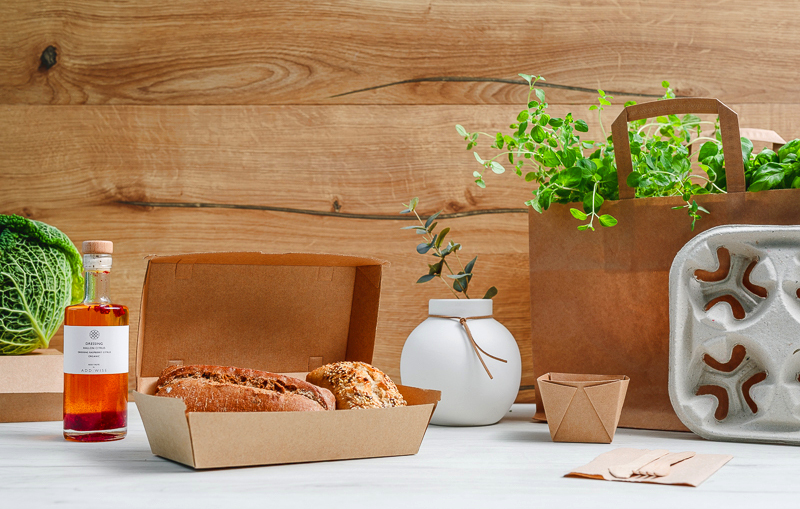
Paper is classified as a renewable raw material provided that forestry is active and responsible, meaning that the forest is replanted and harvested with respect to biodiversity. Growing forests absorb carbon dioxide from the air and store the coal in trees and fields. Forests and vegetation act as nature’s own medicine against climate change.
A Nordic study from IVL shows that the use of paper in the manufacture of beverages and bags, for example, is more climatic than using glass or plastic packaging. Climatic packaging means packaging which, compared to other alternatives, has less climate impact.
- 100% renewable raw material
- Can be reycled as paper packaging
| Material: | Paper with PE-coating* |
| Appearance: | White |
| Raw material: | Tree |
| Temperature: | -20°C to +90°C |
| Microwavable: | Yes |
| Renewable raw material (%): | 100% |
| Recyclable: | Yes, as paper packaging |
| Material: | Papper with PLA-coating* |
| Appearance: | White |
| Raw material: | Tree |
| Temperature: | 0°C to +40°C |
| Microwavable: | No |
| Renewable raw material (%): | 100% |
| Recyclable: | Yes, as paper packaging |
| Material: | Papper with PP-coating* |
| Appearance: | White |
| Raw material: | Tree |
| Temperature: | -18°C to +130°C |
| Microwavable: | Yes |
| Renewable raw material (%): | 100% |
| Recyclable: | Yes, as paper packaging |
* It's possible to get certified paper in some product designs
Recycled paper
Recycled paper is any type of paper collected and recycled. Recycled paper is cleaned from dirt and any printed ink removed. Then the paper is dissolved up to a recycled mass which becomes a raw material for new paper and cardboard.
There may be a risk that recycled paper contains small amounts of chemical impurities from inks, glue and coatings, and possibly the paper of poorer microbiological quality. Therefore, the Swedish Food Administration recommends that recycled paper not be used in direct contact with aqueous and fat foods in high temperatures if the product has not been tested and approved for this purpose.
Recycled paper is paper made entirely or partly of recycled fiber. Mostly, recycled fiber is used in newsprint and cartons, but there are also fine paper grades made from recycled fiber.
Recycling always requires fresh fiber because fibers can only be recycled up to seven times. Repeated recycling eventually leads to shorter and weaker fibers that ultimately have to be erased during recovery. The spent fibers can then be burned and produce energy instead. (Source: SCA)
- Recycled raw material
- 100% renewable raw material
- Can be reycled as paper packaging
| Appearance: | White or brown |
| Raw material: | Recycled paper |
| Temperature: | Depends on product |
| Microwavable: | No |
| Recyclable: | Yes, as paper packaging |
Certified Paper
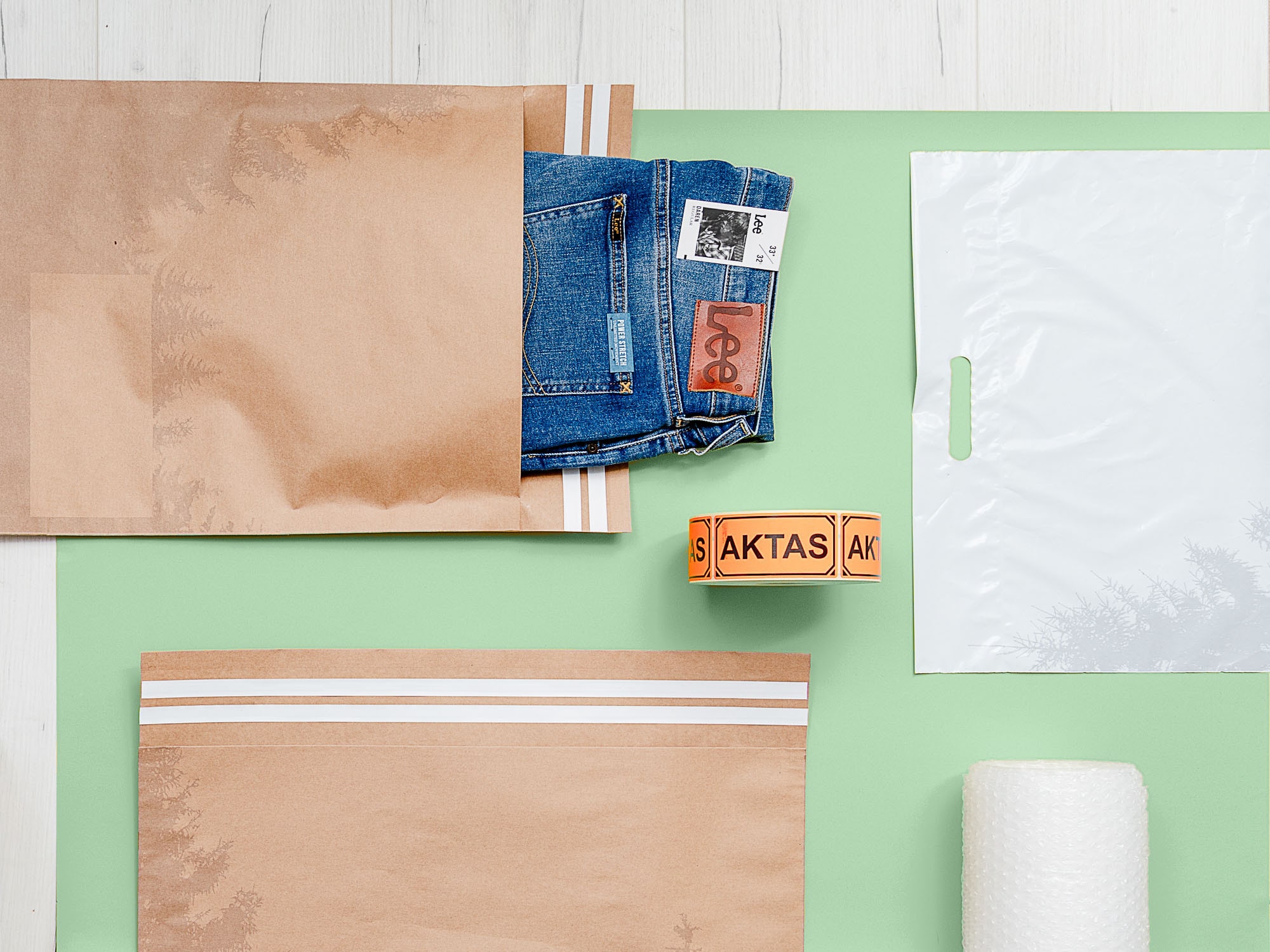
Certified forestry takes environmental values, biodiversity and ecologically valuable environments into account. The certification also protects cultural heritage and promotes long-term forestry. Today, there are two equivalent certifications on the market; FSC and PEFC.
- Renewable raw material
- Responsible forest production
- Can be reycled as paper packaging
Author: Tingstad
Last Updated: 2023-12-18
YOU MAY ALSO BE INTERESTED IN

Materialguide: Plastic.
Our product range includes products made of PET, PS, PP, PVC, etc. Everyone has the different characteristics and in our plastic guide you can learn the different materials and learn what material is right for your products.

Other materials.
Read more about our other materials, such as Aluminum. We will help you find out if the material can be used in the oven or microwave oven and if the material can be recycled, etc.

Recycling Guide.
Many containers contain valuable materials which we through recycling can save both raw materials and energy. Here you can read more on how to recycle different materials.
Customer service
About us
Stores
We can help you!
Visiting Address:
Marieholmsgatan 1, 415 02 Gothenburg
Post Address:
Box 13013, 402 51 Gothenburg






Shop safely with

