
 Svenska
 English
 Norsk
Norsk
 Suomi
Suomi
 Dansk
Dansk



Vaikuta makuun oikealla lautasliinan värillä
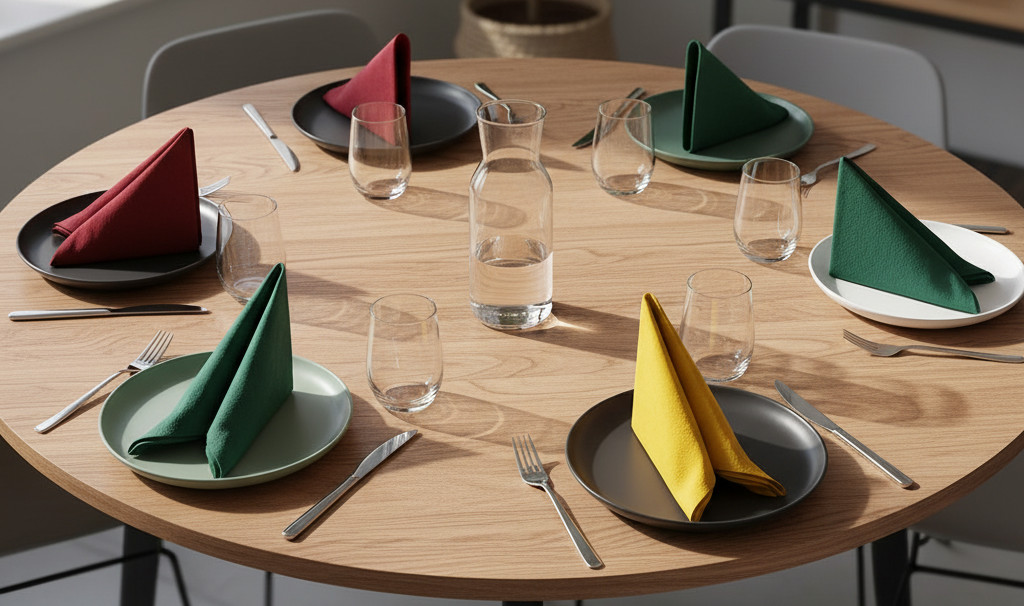
Did you know that our perception of taste is not only influenced by ingredients but also by the colors around us? The choice of napkin color can subtly enhance sweetness, acidity, or saltiness in a meal. Here are tips and scientific insights to create a more enjoyable table setting.
How color affects taste perception
Our senses are interconnected. Colors can influence the perception of taste, temperature, and aroma. Lighter colors can make food seem more acidic, while darker colors can enhance sweetness or richness.
COLORS
Practical tips for table setting
- Choose color based on the meal
Think about the dish and the feeling you want to enhance. A chocolate dessert gets extra sweetness with a burgundy napkin, while fish and seafood feel more acidic with yellow/orange napkins. - Combine with the rest of the setting
The napkin is part of the whole. Plate colors, runners, and candles also affect taste perception. Create harmonious contrasts and match with the food. - Avoid color conflicts
The wrong color can mute the character of the dish. Example: a dark napkin with a light citrus dessert can make the flavor less pronounced.
FAQ
Which napkin color suits fish and seafood?
Yellow or orange enhances acidity.
Can napkin color really affect taste?
Yes, sensory experiences are interconnected – colors influence taste perception.
How to choose napkin color for dessert?
Red or burgundy can enhance sweetness; light colors can boost acidity.
The color of a napkin does more than complement your table setting – it enhances the overall impression and can even influence how food is perceived. Explore our wide range of napkins in different colors and qualities, from classic 3-ply napkins to exclusive premium options. Create a table setting that harmonizes with both taste and style.













Author: Tingstad
Last Updated: 2025-11-06
.jpeg)
Table setting.
Napkins, table cloths, candles and lanterns - together they make the components you need to create a beautiful table setting. In our range you will find a wide selection of products in different colors and models that will help you create an table setting that fits your business. Shop everything you need for the table setting at Tingstad.
Customer service
About us
Stores
We can help you!
Visiting Address:
Marieholmsgatan 1, 415 02 Gothenburg
Post Address:
Box 13013, 402 51 Gothenburg







Shop safely with

