
 Svenska
 English
 Norsk
 Suomi
 Dansk
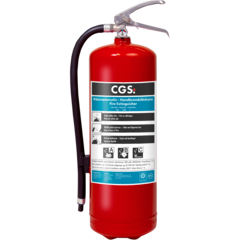
Fire extinguishers
At Tingstad, you will find fire extinguishers for businesses, workplaces, restaurants, and other professional environments. The range includes powder, carbon dioxide (CO2), water, and wet chemical fire extinguishers in various sizes and fire ratings. The right extinguisher depends on your fire risks and the types of materials that could catch fire. Compare fire class, extinguishing agent, and capacity before making your choice.
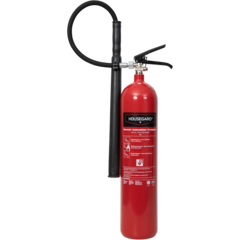
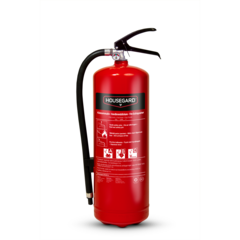

Showing to of articles
Which Fire Extinguisher Should You Choose?
Different fire extinguishers are designed for different types of fires. The most suitable option depends on what may catch fire, how the premises are used, and what equipment is located nearby.
Always check the fire extinguisher's fire rating, performance rating, and extinguishing agent capacity. Two extinguishers of the same size may have different extinguishing capabilities.
Powder Fire Extinguishers
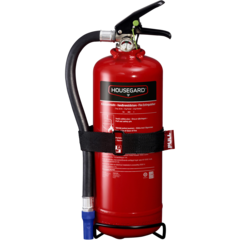
An ABC powder extinguisher can be used on several common types of fires, including fires involving wood, paper, flammable liquids, and gases. This makes it a suitable choice for many different types of workplaces.
Powder extinguishers offer high extinguishing capacity, but the powder spreads easily and can be difficult to clean up after use. In environments with sensitive electronics or other equipment, it may therefore be worth considering alternative extinguishing agents.
Carbon Dioxide (CO₂) Fire Extinguishers
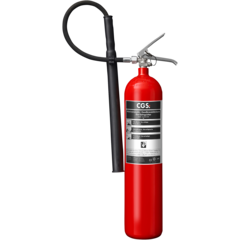
Carbon dioxide extinguishers, also known as CO₂ extinguishers, are primarily used for fires involving flammable liquids (Class B fires).
Since carbon dioxide leaves no residue, these extinguishers can be suitable for environments with electrical or technical equipment. However, they are less suitable for materials that can continue to smoulder, and there is a risk of re-ignition. Carbon dioxide also presents particular risks in small or poorly ventilated spaces.
Water and Water-Based Fire Extinguishers
Water extinguishers are primarily used for fires involving solid materials such as wood, paper, and textiles (Class A fires). Some water-based extinguishing agents contain additives that enable them to be used on additional fire classes.
Choose according to the product's fire rating and intended application. If the extinguisher will be used near electrical equipment, check the product labelling and any specified safety distances.
Never use ordinary water to extinguish burning cooking oil or deep-frying oil.
Wet Chemical Fire Extinguishers
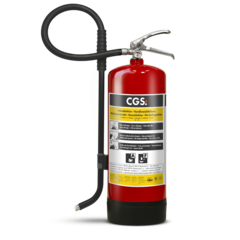
Wet chemical extinguishers are designed for fires involving cooking oils and fats (Class F fires). They are commonly used in restaurants, commercial kitchens, and other environments where deep fryers or large amounts of heated cooking oils are present.
The extinguishing agent is designed to suppress the fire and reduce the risk of re-ignition. Check the product's Class F rating and extinguishing performance based on the kitchen equipment and fire risks present.
What Does a Fire Extinguisher's Fire Rating Mean?
The fire rating indicates which types of fires a fire extinguisher is designed to tackle.
- A: Fires involving solid materials such as wood, paper, and textiles.
- B: Fires involving flammable liquids and materials that can melt and burn.
- C: Fires involving flammable gases.
- D: Fires involving combustible metals such as magnesium and sodium.
- F: Fires involving cooking oils and fats.
A fire extinguisher may be rated for multiple types of fires, such as ABC or AF. Always check the labelling of the specific product.
When dealing with a flammable gas fire, it is especially important that the gas supply can be shut off safely. If gas continues to leak, extinguishing the flames may still leave a dangerous situation.
Fire Extinguishers for Electrical Equipment
Electrical equipment does not have its own fire class under the current European classification system. The former designation E is no longer used as a fire classification.
If a fire extinguisher may be used near live electrical equipment, check the product specifications carefully. Not all extinguishing agents and extinguisher models are suitable for this purpose.
What Does a Fire Extinguisher's Performance Rating Mean?
The performance rating indicates the extinguishing capability achieved during standardised testing.
For example, a powder extinguisher may be marked 43A 233B C.
- 43A: The extinguisher successfully extinguished a standardised Class A test fire.
- 233B: The extinguisher successfully extinguished a standardised Class B test fire.
- C: The extinguisher is approved for use on gas fires.
A higher number within the same fire class indicates a greater tested extinguishing performance. However, the numerical values for Class A and Class B cannot be directly compared with each other.
For Class F, the rating is based on the number of litres of cooking oil used in the test fire. Class C does not include a numerical rating.
Consider Size and Placement
When choosing a fire extinguisher, the extinguishing agent is not the only factor to consider. Also check the extinguisher's weight, dimensions, operating temperature range, and intended use.
In a workplace, fire-fighting equipment should be selected according to the specific fire risks of the business. Extinguishers should be easy to find and access, and employees should know how to use them.
If you are unsure which type of fire extinguisher is needed, or how many extinguishers should be installed, seek advice from a qualified fire safety professional.
Customer service
About us
Stores
We can help you!
Visiting Address:
Marieholmsgatan 1, 415 02 Gothenburg
Post Address:
Box 13013, 402 51 Gothenburg






Shop safely with

