
 Svenska
 English
 Norsk
 Suomi
 Dansk
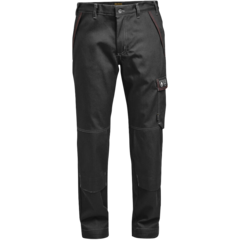
Flame-Resistant Workwear
At Tingstad, you'll find flame-resistant workwear for environments where there is a risk of heat, flames, or sparks. Our range includes work trousers, jackets, coveralls, and tops from brands such as Blåkläder, Jobman, and Portwest, suitable for industries including manufacturing, welding, and maintenance.
Different flame-resistant garments provide protection against different hazards. Some garments are also certified for work involving electric arc hazards, welding, or other specialised tasks. Always check the garment's markings and protection classifications to ensure you choose clothing appropriate for the job.
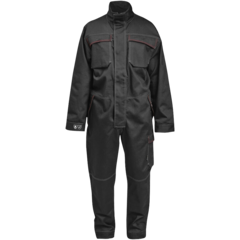
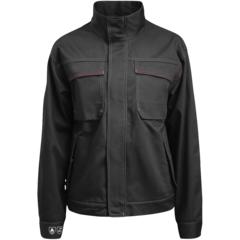
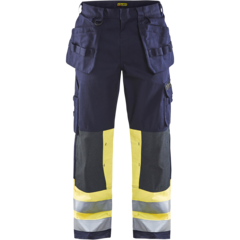
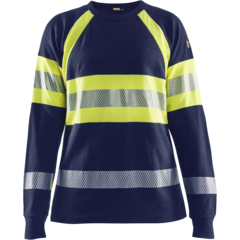

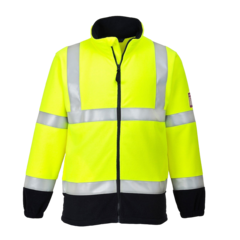
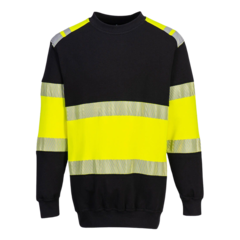
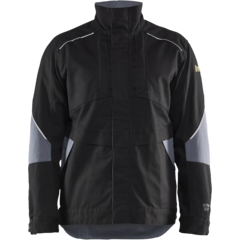
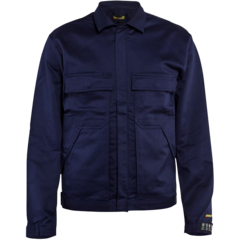
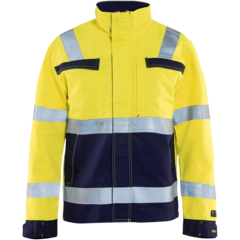
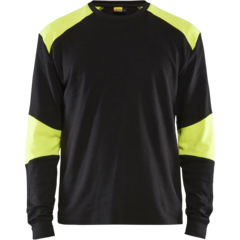
Showing to of articles
Choosing the Right Flame-Resistant Workwear
Flame-resistant workwear is used in industries such as manufacturing, welding, energy, and maintenance, where there is a risk of exposure to heat or flames. The required clothing depends on the specific task and the hazards present.
An important distinction is that flame-resistant garments can provide different types of protection. A garment designed to protect against brief flame contact, for example, may not provide sufficient protection against molten metal splash or an electric arc.
EN ISO 11612 – Protection Against Heat and Flame
EN ISO 11612 is a standard for protective clothing designed to protect against heat and flames. The standard covers several types of thermal exposure, including convective heat, radiant heat, contact heat, and splashes of molten metal.
Garments certified according to EN ISO 11612 are marked with letters and numbers indicating which properties have been tested and the performance level achieved.
| Marking | Meaning |
|---|---|
| A1/A2 | Limited flame spread. A1 refers to surface ignition and A2 to edge ignition. |
| B1-B3 | Protection against convective heat, such as heat transfer from a flame. |
| C1-C4 | Protection against radiant heat. |
| D | Protection against splashes of molten aluminium. |
| E1-E3 | Protection against splashes of molten iron. |
| F1-F3 | Protection against contact heat from hot surfaces or objects. |
For categories B-F, a higher number indicates a higher performance level in the relevant test. Not all flame-resistant garments carry every marking, so always review each product's certification and protection rating.
Flame-Resistant Clothing for Welding and Electrical Work
For welding, protective clothing may need to comply with EN ISO 11611, a standard that includes requirements for protection against welding spatter and brief contact with flames.
For work involving the risk of an electric arc, garments should be tested and classified for that hazard, for example according to relevant parts of IEC 61482-2.
A standard flame-resistant garment is therefore not automatically suitable for every type of welding or electrical work.
Consider How the Clothing Is Used
For protective clothing to perform as intended, it must be worn correctly. If the protective system relies on a combination of a jacket and trousers, both garments should be worn together according to the manufacturer's instructions.
Also consider the clothing worn underneath. Unsuitable materials next to the skin may affect safety during heat exposure. Follow the care instructions and regularly inspect garments for damage or excessive wear.
Always base your selection of flame-resistant workwear on the workplace risk assessment and the garment's documented protective performance.
Customer service
About us
Stores
We can help you!
Visiting Address:
Marieholmsgatan 1, 415 02 Gothenburg
Post Address:
Box 13013, 402 51 Gothenburg







Shop safely with

