
 Svenska
 English
 Norsk
Norsk
 Suomi
Suomi
 Dansk
Dansk

Guide: Work shoes

Tips when choosing work shoes
We spend many hours at our workplaces and regardless of whether you have a job where you stand and walk a lot, or a profession that requires your feet to be protected, the choice of the right shoe is important. We have listed some tips that may be useful along the way.
- Size matters: Too small a size of your work shoe can cause problems such as blisters and corns, among other things. If the shoe is too big, it is not only easier to trip and fall, it can also make the foot slide around the shoe and you get blisters from the sliding.
- Ventilation: Your feet feel good when they are able to breathe. If your work environment allows you to wear sandals or slippers, this is something that can make your feet happy.
- Ventilate or change: Some sweat less, others sweat more. It may be good to make a habit of ventilating the soles between the work pass or switching between different shoes.
- Socks: Compression socks are good for keeping good blood circulation in the feet and legs. The also reduce the risk of swelling.
- Extra support: If you have problems with your feet, you may need to support and facilitate with pads, arch support, insoles, or soles specially made to absorb ample foot sweat.
TYPES OF WORK SHOES AND PROTECTION CLASSES
Safety shoes are used to protect the user against hazards and the risk that may arise when woriking in different enviroments. Different types of safety shoes have different protective properties and they must be clearly labeled so that it is easy to understand what risks the shoe protects the user against.
There are three categories of safety shoes that are based on the protective properties of the shoes. They are:
- Safety footwear for professional use (EN 345) = A sturdy safety shoe that has a protective toe cap that can withstand pressure up to 200 J. This type of safety shoe are available in several different classes. If they meet the basic requirements (toe cap and slip resistant), they are marked with SB. If they also protect against other types of risks, they are marked with S1 - S5, depending on the risks they protect against.
Below you will see a table where we present what the different protection classes have for properties.
- Protective footwear for professional use (EN 346) = Work shoes with a protective toe cap that has been tested to withstand a load of 100 J. If they meet the basic requirements, protective shoes are marked with PB. If they also protect against other risks, it is marked with P1 - P5 depending on the risks they protect against.
- Occupational footwear for professional use (EN 347) = Occupational footwear for professional use do not have a protective toe cap, but still provide protection against various types of risks. This type of shoe is marked with O if they meet the basic requirements. If they also protect against other risks, it is marked with O1 - O5 depending on the risks they protect against.
PROTECTION CLASSES FOR SAFETY SHOES |
SB |
S1 |
S1P | S2 | S3 | S4 | S5 |
|
Toe cap (200J / 15000N) |
|
 |
|
|
|
|
|
|
Closed heel area |
|
|
|
|
|
|
|
|
Antistatic properties (0,1 - 1000MΩ) A |
|
|
|
|
|
|
|
|
Energy absorption in the heel area (20J) E |
|
|
|
|
|
|
|
|
Water-Resistance - WRU |
|
|
|||||
|
Profiled outer sole |
|
|
|||||
|
Puncture resistant sole (1100N) P |
|
|
|
||||
|
Completely in rubber / PU |
|
|
7. Rätt arbetssko per bransch
Skyddsbehovet varierar kraftigt beroende på yrke och arbetsmiljö. Tabellen nedan ger en snabb översikt, följt av djupare rekommendationer per bransch.
| Bransch | Typiska risker | Rekommenderad klass | Viktiga egenskaper |
|---|---|---|---|
| Restaurang & kök | Heta vätskor, hala golv | S2 / S3 | SRCSkinn |
| Serveringspersonal | Hala golv, långt stående | O1 / O2 | SRADämpning |
| Handel & Butik | Långt stående, gods | S1 / O2 | Ergonomi |
| Vård & omsorg | Långa pass, spill | O1 / O2 | Lätt att torka |
| Bygg & hantverk | Fallande föremål, spikar | S3 / S5 | Spiktrampskydd |
| Industri & lager | Tunga lyft, trucktrafik | S1P / S3 | Spiktrampskydd |
Restaurang & kök
S2 / S3 + SRC
Tåhätta mot fallande redskap. SRC-halkskydd avgörande på blöta köksgolv. Täckt skinnsko håller foten torr.
Se halkfria skor →Vård & omsorg
O1 / O2
Långa pass kräver utmärkt stötdämpning. Välj lättavtorkad skinnsko eller luftig sko för max komfort.
Se vårdskor →Bygg & hantverk
S3 / S5
Fötterna måste skyddas mot fallande föremål och spikar. S3 med spiktrampskydd för utomhusbruk.
Se skyddsskor →Butik & service
OB / O1
Presentation och komfort väger tungt. Snygga sneakers eller lätta yrkesskor med god dämpning för golvet.
Se butiksskor →Work shoes for your industry
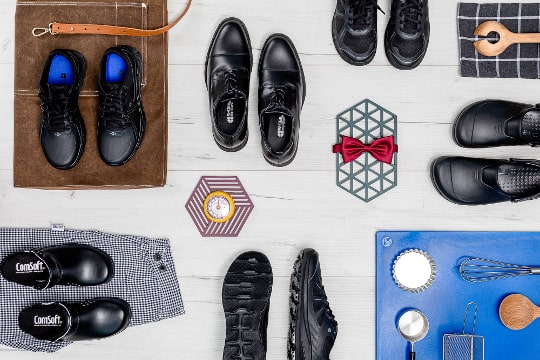
Shoes for restaurant workers.
In the different professional roles in a restaurant you work with alot walking and standing up. Then shoes are needed that support, and can withstand both dry and slippery or even oily floors. We have shoes that fit both chefs and service staff. With good shoes, the job gets done easier.
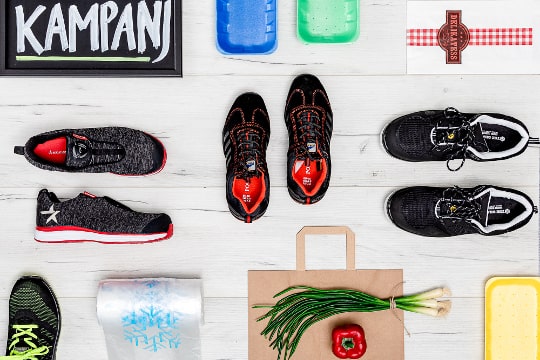
Shoes for grocery store workers.
Good and foot-proof shoes with supporting and protective properties are required for anyone working in the grocery trade. Make your work day better by using shoes that are made for the job.
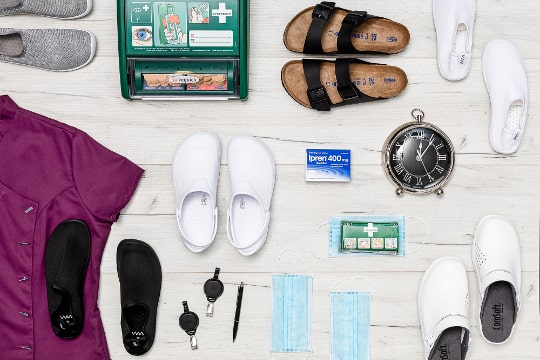
Shoes for care workers.
In health care, it is important to have something nice on your feet. With us you will find slippers that provide support where needed and at the same time give an airy feel to your feet, so you can focus on providing the best possible care.
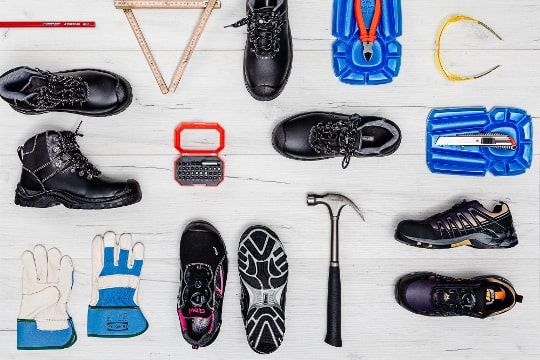
Shoes for craftsmen.
In the craft industry, protection is crucial. The feet are of course no exception. They need to be protected from heavy and sharp objects both from above and from below. In addition, they should be nice to work in. We have a large selection of comfortable shoes that give your feet the right protection and support.
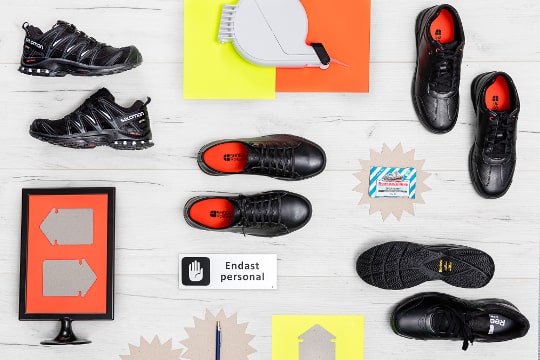
Shoes for retail workers.
Working in retail business often involves a lot of standing and walking. In order to do a good job and provide good service, it is important to be happy with what you wear from top to toe. For toes and feet we have among other things nice and comfortable sneakers that are perfect for delivering on the shop floor.
Author: Tingstad
Last Updated: 2026-04-17
Customer service
About us
Stores
We can help you!
Visiting Address:
Marieholmsgatan 1, 415 02 Gothenburg
Post Address:
Box 13013, 402 51 Gothenburg





Shop safely with

